
The Silicon Valley of Failures - part 1
An interview with Neil Cohen - US marketing therapist for startups

Hello reactor community !
Welcome back here
I’m very glad you start the series of interviews of this newsletter!
Here is the table of contents:
PS: you can click directly on a section title to read it.
Introduction
The topic that I am addressing today is a common opinion about innovation, disruptive, technology, and breakthrough.
Being successful with your deeptech business is not the result of good grades in school
There is a website listing all Google’s products which have been tried and failed for the last fifteen years: The Google Cemetery
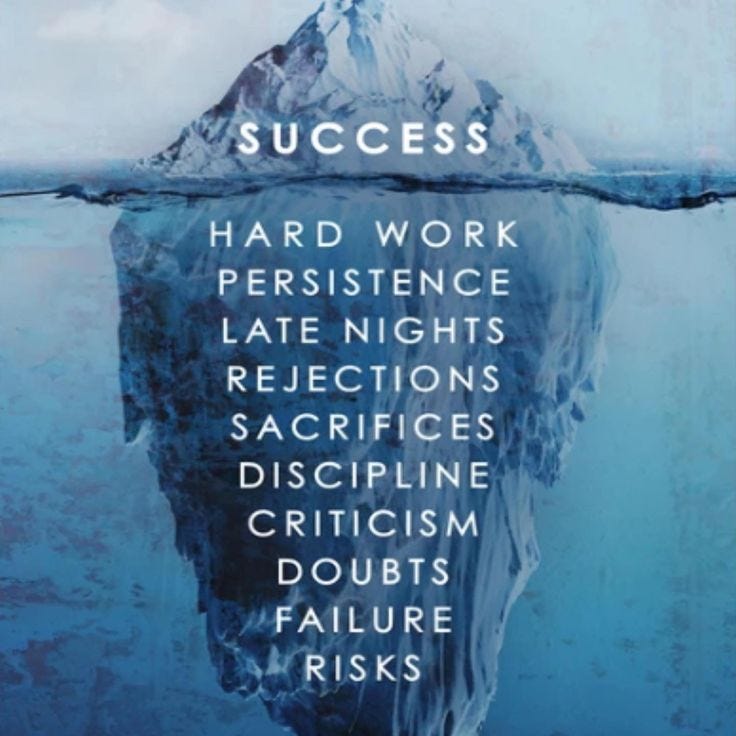
What you see (on the surface - see image below) is the results of hundreds or thousands of iterations in the Silicon Valley.
I recently came across this article showing the Top 100 colleges ranked by startup founders and here is a snap at the first ten:
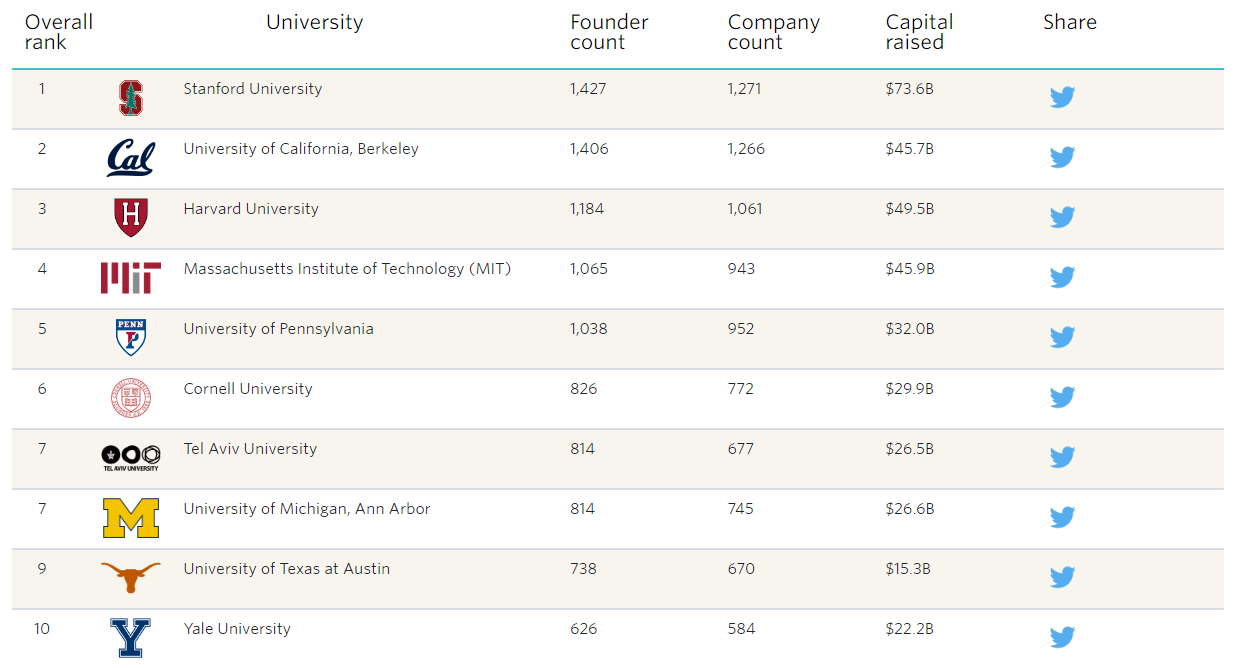
But I want you to take a step back and trying to imagine the number of company projects originally launched at Stanford compared to the 1;271 companies created and backed by Venture Capitalists.
2,000 ? No try : 30,000. At least.
In this article of European Spaceflight Lld, it is highlighted that there are currently more launchers in preparation in Europe than customers (satellite manufacturers). What does that mean ?
Europe is finally catching up on the launch industry and making its own commercial rockets.
Competition is excellent to increase quality.
There are more than 30+ today. There will be 10 left in 7 years and 2 left only 20 years from now. Not everyone succeeds and that is fine. The market will do its thing and select the players that will stay in the long run.
The question is now: do you want to be one of those 2 companies left after 20 years?
Yes?
Keep reading ;)
Whether you are fan of Elon Musk or not, it is important to remember all the steps he went through to successfully land a rocket boost safely back on the ground. I advise you to watch and rewatch SpaceX’s own 2-minute video entitled “How NOT to land an Orbital Rocket Booster” showing all their failed attempts:
It wasn’t possible until it was. Now, lots of rocket companies are considering landing their boosters back on the ground.
When you are yourself doing your own deeptech startup, you are creating something that has never been done before. The easy way is to lose motivation and get scared and that might happen from time to time. There will be people criticizing, there will be failures along the way but if you truly believe in your vision, keep working. The world will end up acknowledging it.
My very first guest is Neil Cohen. He lives in the US is a marketing specialist.
During his career he has helped hundreds of startups founders and CEOs of companies to find the right word to transform their idea into a viable product.
He has been an entrepreneur himself - something I did learn myself during the interview, and he he has launched two companies.
I decided to invite Neil on this podcast because when we talk about deeptech start ups, we cannot help looking at the US where major worldwide take players are like Tesla, Amazon, Meta, Apple and I’m frustrated because I keep on asking myself why there hasn’t been such big tech players in the world coming from Europe in the last 20 years.
Is there something that US entrepreneurs or the US government is doing to make those tech giants appear and survive?
This is why I invited Neil today on Reactor.
Ideas are great but execution is all that matters. The importance of ecosystem
Jerome : Thank you very much, Neil, for accepting this first interview for the Reactor newsletter about entrepreneurship. I'm very glad to have you here. I just have a personal note before we jump in the questions I have got for you: a few days ago, you saw me publishing about my company, my attempt to start a company: Space Eternity. And actually it was one of the first time in my life that I mentioned it publicly. What did you think when you saw that ?
Neil Cohen Well, what do I think about you saying it out loud? Or what do I think about your idea? Because there's thoughts about both. 😁
I'll start with the former : lot of people have ideas. How many times you've heard person like “oh, you should do this or you do that” or better yet, you hear somebody said “ I had that idea three years ago”. Right? Well, but you know what?
You didn't do it.
So the fact that you're had the idea me is meaningless, unless you act on it.
So yeah, so that's what I think about that. So the fact that you had the idea and that you acted on it because you felt so strongly about it, it already differentiates you from 99.9% of the rest of the human beings out there and I compliment you on it because a lot of people just don't act on what they think.
Jerome : What would you say the only one person out there just listening to / reading us, to this very conversation and this person has a business idea. He/she feels lost. But still, he.she thinks there's something special about it. What would you say to him.her?
Neil Cohen Well, well Well, first of all, if there's just one person out there who listens and you have an impact on them, then you are successful. (Jerome : my goal with Reactor !)
And so what I would say to them :
“Look, if you have an open mind and learn and take in information from all sources provided by Reactor, you’re doing the best for your project to thrive.”
What, you're doing Jerome with Reactor is : bringing a lot of voices to one place to talk together and to be a resource for founders. And you know, we'll talk about that a little bit in the questions is: when you're developing an entrepreneurial ecosystem, like when you have NASA ecosystem or mentoring ecosystems where resources are gathered and you can get insight and learn. That’s how you create strength in an ecosystem.
Answering critiscims
Jerome : So let’s say, that person is launching his idea and getting out there and talking about it. But he.she receives criticisms from all sides?
How would you answer to a critic, like someone would say “You know, I've been in the market for 40 years. You know, I know everything you know, your idea will NOT work.”
Neil Cohen : I'm trying to think of a polite way to say : opinions are like you know, a part of your body where you relieve yourself. Everybody's got one. Let’s just say it:
Do not worry too much about opinions. Because opinions are like assholes, everybody’s got one
For all of eternity, every everybody says something didn't work. There was a famous quote from the guy who ran the US patents department from around the 1900s. He said
‘You don't need patents anymore. Everything that's been invented has been invented, and there will be no inventions.’ - the person who ran the US department of patents in the early 1900s.
That sounds crazy when you think about it now. But why do you think today’s different? It is not. We still have tons to discover. If you look through society over and over and over and over again, every time there's been innovation, people said : ‘it's never going to happen. It's never going to happen’. If I say this :
Why would I need a car? I've got a horse.
Why would I Why would I need television? I've got radio.
This internet thing? It'll never catch on. It's a fad.
No, nobody will ever give their credit card over the internet. Nobody will ever bank over the internet.
The logistics don't exist to for people to shop over the internet and get them their packages.
There is a company that I work with, it's in the wind business. It's an AI (Artificial Intelligence) data driven business. It’s going to improve the energy output of wind farms by wake steering the turbines. They are going to have the whole wind farm use its data to work collaboratively. All that data will be in the cloud accessible able to adapt to the weather conditions to optimally run that wind farm.
People who have been in the wind industry like in Western Europe, or Eastern Europe, forever, and they look at it and we had a person say to us
‘I don't understand why would you put our data in the cloud? Why would you need edge computing? Like we don't understand that. Why?’ asked a sceptical wind business professional.
Because they've been running this industry this way for 40 years and they don't see it. Here's another thing: most people see only things from the past, not the future. Okay, so good. So here's an example
if you were going back 40 years and you were a company that made high performance compasses, a compass for navigation, while you're hiking or things along that line. And if you were the owner of one of those compasses and I came to you and they said like,
What can we do better regarding your navigation?
You might say like:
Well, if you added more degrees to my compass, that would be good because if I'm off just half a degree and I'm done with my hike, I'm gonna still have to walk a quarter of a mile back to my car. I don't want to be that far away. Also, sometimes I’m out and it gets a little late. If there was a backlight or a phosphorus thing.
That person would NOT say :
It'd be a good idea if you were to get 20 asynchronous satellites and put them around the Earth, and then build a device that I can hold in my head. That would tell me my exact longitude and latitude.
Nobody would give you that insight, because they don't know what you can do.
When people who have been around for 30 or 40 years or 20 years, whatever they say is that it can't be done. They're only thinking in terms of the way it was and not the way it can be. And they can only think of barriers.
And I'll say my last thing on this:
I hear a lot ‘That person's got 25 years of experience’ and I say: ‘does he.she have 25 years of experience or does he.she have one year of experience 25 times’
Uncertainty in 2022
Jerome I've never heard that one. It's a first. If we come back to the present situation when you might see a lot of VCs, like a lot of people saying ‘we don't want to invest anymore in inflation, war in Ukraine, upcoming recession. People want to get their money at the end of the month. And how do you get the courage to go out and do and do it?
Neil Cohen First, VCs belong to an unique group, and, you know, there's a love hate relationship, right? They have a wonderful function because they take a lot of risks to get companies going. But among VCs a lot of them made a lot of money. And people who have made a lot of money often think that because they have built themselves up that they made money, that they're often the smartest person in the room. That they know better. By the way, they are pretty smart. And they are doing a great thing, right? So you know, it not every VC is that way. I don't want to paint them all. But you do get a lot ‘Oh, you got to do it this way.’ and you'll talk to another VC and he.she will say : ‘It's like that's completely wrong.’ You know what it's like? It's like when you get your hair cut. Or programmers: people who code a thing would say ‘this code is great’. The next person looks at the code and says. ‘Seriously, who did this?’
So here's what people have to do:
If you're really serious about a business: Should you talk to other people about it or should you talk to your potential customers?
You have to do what I call empathetic interviews, which is don't try to sell people your idea:
Ask them questions
Understand their day in their life to know where the value can be added.
And there's a way to do that:
Tell me about your day.
What do you do?
How do you do it?
Where are the pressure points in your day?
Where's the pain in your day?
What are the things that frustrate you and can you help me understand it?
Now you can go down and start funneling more to what you're doing and you can say like
Tell me about when you're doing XYZ. Not it's again, it's not about your product, but the thing that your product myself:
Why do you do it that way?
Do you find friction there?
What do you wish you could do differently? If you could?
What you're looking for as validation : yes, there's friction. Yes, there's pain.
Examples of answers would be:
“If I can only have it this way, my day would be three times longer because I have to do this manually” a valuable complaint from a customer that you want to hear.
Job stability
Jerome Very insightful ! Let’s continue with side hustles: in France, it's happening slowly, but people are starting side businesses after their workday, on weekends and during the evening. And I feel it's more commonly accepted to do that in the US, for example: you can be a master's students and I have a part time job and maybe even work in a startup. But here, if you work at a big company and you start telling: I'm working on my own tiny project afterwork, managers might say, ‘Yeah, You'll be tired. So I don't want you to do that because it will affect your daily job. So, stop’ And then, you know, people are afraid about losing the job. And this shouldn't be because it's France and job security is far greater in France than in the US.
Neil Cohen Yeah. So let's unpack a few of those things: It's often in the US but everywhere else that people develop their business idea as a side as a side hustle while they're doing their other job because not everybody's independently wealthy. Not everybody has rich parents that were so successful, like Elon Musk, or some of these other people, right. You know, they forget where the original money came from. And so that's not common, but at some point
You've got to make a commitment to the idea and go out and do it. Don't tell your boss it's not your boss's business.
I tell people don't tell your boss, okay, and I'll tell you why in a second, but let's talk about you touched on job stability, right in the US. People say ‘Oh, I don't know how you do startups. It's so unstable’. And I answer
‘Actually, no, it's not. Startups are more stable in my opinion, because if you're a funded startup, you're funded startup. You know what your runway is, you know what your burn rate is, and you're in complete control. If you've got a team of three 5, 10 15 people, everybody is rowing the oars in the same direction. Everybody's shooting for the same goal. Everybody's solving the same problems. If you hire well, and you have the right group of founders that are together, then you’ve got a harmonious group, with an idea that's solving a real problem. That to me is stable. What's not stable, being in a big company. Like three weeks ago, Twitter was a very stable company. A week from now, it won't exist. But look at Facebook: never had layoffs. Look at Amazon: Never had layoffs. Happenning in 2022
There's no such thing as stability in a big company. They will cut you loose as soon as they have to.
And only and only look at what happened. There might be a recession well, we need to prepare. Business needs to prepare. We got to protect shareholder value. Well, let's cut 5% of the workforce. Why? Well, because we have to prepare for recession, but there isn't a recession. Yeah, but it might happen, but it might not happen. It doesn't matter. I always say to myself, who do you trust? Do you trust the company and everybody around you like you trust everybody who's gonna make the decisions for you? Where do you trust your decisions? And do you trust your judgment? I say to friends all the time when they go out on the road :
if I asked you to put 100% of your effort and ethic and everything to finding a great new job, will you find that job? and they go Yeah! I said ‘okay, now if I told you to put 100% of your work ethic, your idea and all that kind of stuff into something that you want to do on your own, will you be successful?’ and they go like ‘Well, yeah!’ I conclude: what are you worried about?
Jerome Very interesting! People always try to focus on the money, the VC, the funding the equity. And you said what's much more important is the idea and the team around it. That's something you have control over. You can hire you, can you can work on your idea, collect your customers’ feedback. What you cannot do is influence VCs: they come and go and they will come when when you're ready.
Neil Cohen Here's the key thing for dealing with VCs that I've learned because, again, they play an important and critical part in the ecosystem. And a good VC can really help you out understand your business. Helping you make connections that's going to help you in business development, and that's going to have good fiduciary oversight over the company. That's what you want. You don't want them to tell you how to run it day to day but you want them to be a partner in building the business and giving you good financial oversight. But when you get into meeting, VCs will always give you their opinions. This is the importance of these empathetic interviews. If you've gone out and talked to a ton of people, if you've talked to 20 30, 40 people, and they all have an uniform feedback on where the pain is in the area that you're doing. My answer to VCs’ opinions on the market - which can be totally twisted and far from reality - is ‘That's precious what you just said. That's really smart. We thought the same thing to then we went out and talked to 40 customers, and this is what we learned….' and I show them what is really going on.
Jerome The real pain. You know the real pain because you talk to customers.
Neil Cohen What you want to do is you want to acknowledge them. They're smart people and they help. But if you do the work as an entrepreneur, it's easy. You can show them the data because the data speaks. Your answer should be : “we can do your idea. But 40 customers said this, which is why we're building this.”
Jerome As an entrepreneur you can be in love with the first idea but it might not be the like the right answer to the problem. And that was actually my case, when I was when I was starting my startup Space Eternity, I was in love with my idea. I wanted to build an Alexandria Library in space, you know, for people to get access to all the books that are open access, but even if it was fun on paper, nobody would be able to say: ‘I'm buying it’
Neil Cohen Well, we all have personal confirmation bias based on our experience. What I tell entrepreneurs all the time is that the day you start the business, you're no longer the customer and how you think and how you feel, it doesn't matter anymore. I'm going to start this company, you are now no longer the customer. And it's hard for people to do because it's all from your perspective. And so that's why you have to then go out and talk to people and learn from them and listen to them and have empathy for them. Okay, and now you can use your own experience but you're not the customer anymore. So if you're building it for you completely for you, it's a great product for you. And to your point, I always say because I work with lots of companies and helping them figure out what their message is and position the marketplace. And every time I hear it:
Your first idea always sucks. So do your second and third ideas. Go out and talk to customers listen, and then figure it out. So that's all I have to say around that.
… and that’s it for part one !
I have decided to stop the interview and call it a first part. I want to keep it short and easy to read.
Thanks for reading and sharing !
If you have anyone, you recommend me to interview to help the European deeptech startups thrive, do not hesitate to write in the comment section below or email it to me at Jerome.gilleron@outlook.com
As always, keep learning, stay humble and ambitious.
See you soon,
Jerome ♥️
Very interesting Jerome. Well done!
Olivier D.